
Do I Need a Personal Injury Lawyer If I’m Submitting a Claim to Insurance?
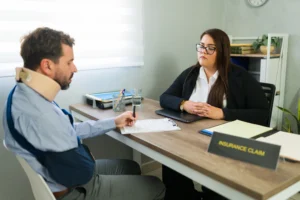 That is exactly the right question to be asking, and the honest answer is that it depends on factors most injured people have no way to evaluate on their own.
The severity of the injury, whether fault is disputed, how the carrier is behaving, and what future medical costs might look like all affect whether legal representation changes the outcome.
For some claims, it does not. For many, it makes a significant difference. The only way to know which category yours falls into is to have someone look at the specific facts, and that conversation costs nothing.
When Handling Your Own Claim Is Reasonable
There are situations where hiring a personal injury lawyer may add less value than the cost of the fee. These typically involve:
- Minor accidents where the at-fault party is clearly established and uncontested
- Injuries that required little or no medical treatment and resolved fully within a short period
- Property damage-only claims with no physical injury component
- Situations where the at-fault driver’s insurance carrier has accepted liability without dispute, and the settlement offer reflects your actual out-of-pocket losses
If your total medical expenses were minimal, you missed no work, and you have no ongoing symptoms, legal representation may not be necessary.
When Going It Alone Creates Problems
The scenarios in which self-representation poses serious risk are more common than most people expect. Insurance adjusters handle claims professionally every day. Most injured people handle one or two in a lifetime. That experience gap matters, and it is not always visible until after a settlement has been signed.
Situations where going without representation carries real risk:
- Any injury requiring emergency care, surgery, specialist treatment, or ongoing rehabilitation
- Injuries where future medical costs are uncertain or likely
- Cases where fault is disputed, or the carrier is arguing the claimant shares responsibility
- Soft tissue injuries that carriers routinely undervalue
- Accidents involving commercial vehicles, rideshare drivers, or multiple parties
- Situations where the claimant has a pre-existing condition the carrier uses to reduce the claim
- Permanent injuries, scarring, or any condition that affects the ability to work going forward
- Cases involving uninsured or underinsured drivers
The single most common mistake unrepresented claimants make is settling before the full scope of their injury is understood. Once a settlement is signed and a release is executed, there is no going back, and with Florida’s two-year filing deadline under Florida Statutes § 95.11, which runs from the date of the accident, carriers count on the pressure to resolve quickly.
Medical complications that surface later, treatment needs that were not anticipated, and income losses that continue past the settlement date all become the claimant’s problem alone.
What Insurance Companies Do During the Claims Process
This is where understanding the process changes the picture. Despite what many people think, insurance carriers are not neutral parties working to ensure you receive fair compensation. Their adjusters are trained to resolve claims efficiently, which, from the carrier’s perspective, means resolving them for as little as possible.
Common carrier tactics that unrepresented claimants frequently do not recognize until after the damage is done:
- Requesting a recorded statement early in the process, before the full extent of the injury is known, and using the claimant’s own words to limit the claim later
- Making a fast, low settlement offer before medical treatment is complete, counting on the claimant’s immediate financial pressure to accept it
- Arguing comparative fault under Florida Statutes § 768.81 to reduce their exposure, particularly in cases involving pedestrians, motorcyclists, or multi-vehicle accidents
- Using gaps in medical treatment, whether caused by cost, scheduling, or the claimant’s own assessment that they were improving, to argue the injury was not serious
- Requesting access to years of prior medical records, looking for pre-existing conditions to blame for current symptoms
None of these tactics is illegal. They are standard practice, and they work effectively against claimants who do not know to look for them. Most injured people do not know to look for them until after the fact.
What Legal Representation Actually Changes
A personal injury attorney does several things that directly affect the outcome of your claim. They send a spoliation letter to preserve evidence before it disappears. They hold off on settlement discussions until the full medical picture is established. They understand how to value non-economic damages like pain and suffering, which carriers routinely minimize when dealing with unrepresented claimants. They know which arguments to push back on and which carrier positions have no legal support.
The research on represented versus unrepresented personal injury claimants consistently shows that represented claimants recover more, even after the attorney’s contingency fee is deducted. That finding does not apply equally to every claim, which is why the size and complexity of the case matter, but for anything beyond a truly minor incident, the data supports getting at least a consultation before deciding to go it alone.
The Free Case Evaluation Answers the Question You Cannot Answer Yourself
Here is the practical problem: the factors that determine whether you need legal representation are the same factors that most injured people have no way to evaluate without legal knowledge. How serious is the carrier likely to fight this? Is the settlement offer on the table reasonable for this type of injury? Are there damages being left out that should be included? Is the comparative fault argument they are raising legitimate?
A free case evaluation exists specifically to answer those questions. It is not a sales pitch. It provides information and puts you in a position to make a real decision rather than one based on uncertainty. Most injured people who go through that conversation either leave knowing their claim is straightforward enough to handle independently, or they leave understanding why it is not. Either outcome is more useful than guessing.
Schedule Your Free Case Evaluation Today
If you were injured and are unsure whether what you are dealing with warrants legal representation, Smith, Feddeler & Smith, P.A. offers free case evaluations with no obligation. One conversation is usually enough to know. Call (863) 688-7766 or contact us online to get started.






Phone calls were returned timely. I was kept informed of my case and my questions were answered. The staff was professional, courteous, concerned and caring. Overall my experience with this law firm was good and I would recommend them to a friend.
- Rhonda D.
Keep up the good work!
- Thomas B.Everyone who I had the pleasure in talking to or email correspondence has been great and professional. Thank you all for the good service.
- Elixsandra F.Everyone in the office was always helpful and did everything to help up on the case.
- Thomas D.I appreciate all the work you all did. I will recommended Brad Smith and Smith, Feddeler & Smith to anyone who is looking for good legal help.
- Robert S.I would like to thank Mr. Feddeler and the Law Firm for their help in my workers; compensation case. I want to especially thank Julie for being such a special lady and for have such a patient and wonderful personality and manners. She kept me informed of what was going on and answered all my questions when I needed them.
- Stanley E.I am thankful with the firm and staff for always being so courteous and helpful with my case and with me. You guys helped me every step of the way and I am glad I chose your firm to represent me. Thank you for all you do!
- A Montalvo.Everyone that was involved with my case was awesome! No complaints. Hope I never need to get a lawyer again, but if I did I would choose this Law Firm. So thank you!
- Juanita B.I was bit by a Pit Bull in the face in May of 2016. The injuries I suffered was a fractures nose and teeth marks to the nose and under my lip. I chose Smith, Feddeler because they had a great reputation on line. They were very compassionate, very sympathetic and very respectful of the situation I was going through. The attorney was very sincere and staff always responsive and available when I needed. I would definitely recommend Smith, Feddeler & Smith. Kevin Balentine was very helpful and efficient.
- Lauren M.If you ever want a good attorney who is going to fight and advocate for injured workers and knows the law of workers’ comp in the State of Florida, please contact Brad at Smith, Feddeler & Smith. I assure you they will fight for your rights and you will come out victorious, and you will be able to tell somebody else like I’m telling you.
- Ricky B.Contact Us For A Free Consultation With A Qualified Lawyer