
Orlando Premises Liability Lawyer
 The assumption most people make when they are hurt on a major Orlando property is that the company will handle it. The resort has insurance.
The theme park has a medical team on site. The property manager has a process. What people usually discover is that the process exists to protect the property, not to make the injured person whole.
Getting hurt at a hotel on International Drive, a retail center off Sand Lake Road, or an apartment complex in the MetroWest corridor does not mean the company has your interests in mind. It means their risk management team has your file in their system.
Smith, Feddeler & Smith, P.A., handles premises liability cases for people in Orlando and throughout Orange County. For a free case evaluation, call (407) 553-3028 or contact us online.
Why Individuals Choose Us to Handle These Cases in Orlando
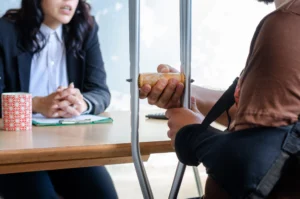 Orlando’s premises liability defendants are frequently corporations that treat injury claims as a cost-of-business calculation. They have claims departments, preferred defense counsel, and institutional knowledge about which arguments reduce their exposure on their own properties. The injured person usually walks in with none of that.
We approach these cases with the same level of preparation as the other side brings. We investigate what the property owner knew, when their last inspection occurred, whether prior incidents involving the same condition were documented, and how their own maintenance protocols compare to what was actually followed.
We have spent years pressing these claims through litigation in Orange County and taking them to verdict when the offer on the table did not reflect the evidence. Our testimonials and case results reflect that commitment.
There is no attorney fee unless we recover for you, though clients may still be responsible for certain litigation costs.
For out-of-state visitors injured in Orlando, we handle cases without requiring you to return to Florida unless necessary.
What the Property Owner Already Knows That You Do Not
When you slip on a wet floor at a hotel, fall on a broken walkway at a resort, or are assaulted in a parking structure, the property owner already has information you do not. That information is rarely volunteered. It has to be requested, preserved, and in some cases fought for. It typically includes:
- Maintenance logs that show whether the condition was reported before your injury occurred
- Prior incident reports from the same location that may document the same hazard
- Security assessments that may have flagged the exact area where an attack occurred
- Surveillance footage that in high-traffic commercial properties is frequently overwritten within 24 to 72 hours unless a formal preservation request is made quickly
Prior incident reports involving the same condition are precisely the evidence that establishes constructive notice, and they exist more often than defendants acknowledge.
This is why the period immediately following an Orlando premises accident matters. The evidence that supports your claim does not hold for you.
How Florida Law Frames Property Owner Responsibility
Florida’s premises liability law draws a clear legal distinction between types of visitors, and where you fall on that spectrum determines what a property owner owes you.
Invitees
Most people hurt on commercial property, including hotel guests, retail shoppers, theme park visitors, and apartment residents using common areas, are classified as invitees. Property owners owe invitees the highest duty of care: they must conduct reasonable inspections, identify hazardous conditions, and either correct them or provide adequate warning.
Actual or Constructive Knowledge
For slip-and-fall cases specifically, Florida Statutes § 768.0755 places the burden on the injured person to show that the property owner had actual or constructive knowledge of dangerous conditions like transitory substances and failed to act. Actual knowledge means someone told them. Constructive knowledge means the condition existed long enough that a property owner exercising reasonable care should have found it. Building that case requires the property’s own records.
Florida’s modified comparative negligence standard under Florida Statutes § 768.81 allows defendants to reduce what they owe by arguing that you share fault. Above 50%, recovery is cut off entirely. Expect this argument in every contested premises case in Orange County. The filing deadline under Florida Statutes § 95.11 is two years from the date of the injury.
Where These Claims Arise Across Orlando
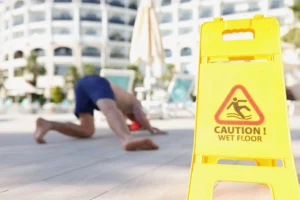 The range of premises liability cases in this city is broader than most, shaped by Orlando’s specific commercial and residential mix:
- Hotel and resort corridors on International Drive and US-192, where pool decks, wet lobby surfaces, and aging stairwell infrastructure generate frequent serious injuries
- Theme park and entertainment complex properties, where crowd management failures, wet queue areas, and ride-related incidents produce claims against some of the largest corporate defendants in Florida
- The area surrounding the Orange County Convention Center, where large-scale events bring temporary flooring, cable runs, and foot traffic, is not always designed to accommodate permanent venues safely
- Rapidly developing apartment and condominium corridors in MetroWest, Horizon West, and Lake Nona, where the construction pace sometimes outpaces maintenance infrastructure from the start
- Retail centers along Sand Lake Road and the Mall at Millenia corridor, where Florida’s daily afternoon rain cycle translates directly into unaddressed wet entrances and spill conditions
- Hotel and entertainment venue parking structures, where documented crime patterns in certain areas and inadequate lighting create foreseeable assault and robbery risks
What a Premises Liability Claim Can Recover
Serious falls and assaults on commercial property produce injuries that frequently require extensive treatment and carry lasting consequences. A claim may include:
- Emergency treatment, hospitalization, and surgery
- Orthopedic and neurological care for fractures, joint damage, or head trauma
- Physical therapy and ongoing rehabilitation
- Lost income during the recovery period
- Reduced earning capacity if the injury affects long-term work ability
- Pain, suffering, and loss of daily activities that mattered to you
- Future medical expenses where ongoing treatment is projected
- Wrongful death damages when a premises liability incident is fatal
Frequently Asked Questions About Premises Liability Cases in Orlando
Does a Waiver Signed at Hotel Check-In or Park Entry Block a Premises Liability Claim?
Not automatically. Florida courts have consistently held that liability waivers do not protect property owners from claims involving gross negligence, a statutory violation, or conduct that goes beyond ordinary carelessness. Whether a specific waiver applies to your situation depends on how it was written, what it actually covered, and the nature of the hazard involved. A waiver being on file is the starting point of that analysis, not the conclusion.
Does Florida Law Treat Injuries to Children Differently on Commercial Property?
Yes. The attractive nuisance doctrine holds property owners to a higher standard when a hazardous condition is likely to draw children who may not appreciate the danger. Swimming pools, certain amusement features, and playground equipment on commercial and residential properties can trigger this analysis. Child injury claims on someone else’s property are often governed by a more favorable legal standard than adult injury claims.
What If the Property Argues the Hazard Was Open and Obvious?
Florida courts have held that an open and obvious condition does not automatically eliminate a property owner’s liability, particularly when the owner could reasonably anticipate that guests would be distracted or would encounter the hazard anyway. The defense is often raised in high-traffic Orlando properties. It does not always hold.
What If Another Guest or Visitor Created the Hazard That Caused Your Injury?
A property owner can still be liable even when the dangerous condition was created by someone other than their staff. Under Florida’s constructive notice standard, if the hazard existed long enough that a reasonable inspection would have caught it, the owner bears responsibility for failing to find and address it. In high-volume Orlando properties where staff-to-guest ratios are stretched, conditions created by other visitors frequently go unaddressed longer than they should. That timeline is part of what the evidence establishes.
What If the Injury Happened at a Short-Term Rental Property Such as an Airbnb or Vrbo?
Depending on the circumstances, responsibility may fall on the individual property owner, the platform through which it was booked, a property management company hired to maintain the unit, or some combination of all three. Florida’s premises liability standards still apply, but identifying the right defendant requires untangling the ownership and management structure behind the listing. The booking platform’s own liability protection policies are not a substitute for a civil claim and should not be treated as one.
Close The Gap Between Their Preparation and Yours
When a large Orlando property owner’s risk management team opens your file, they already know more about the condition that hurt you than you do. Closing that gap requires moving quickly and investigating thoroughly from the start.
Smith, Feddeler & Smith, P.A., handles premises liability cases across Orlando and Orange County on a contingency basis and is prepared to press these claims as far as the evidence supports. A free case evaluation with our Orlando premises liability attorneys costs you nothing and starts the process of putting information on your side rather than theirs.
Call (407) 553-3028 or contact us online to schedule your case evaluation today.


Phone calls were returned timely. I was kept informed of my case and my questions were answered. The staff was professional, courteous, concerned and caring. Overall my experience with this law firm was good and I would recommend them to a friend.
- Rhonda D.
Keep up the good work!
- Thomas B.Everyone who I had the pleasure in talking to or email correspondence has been great and professional. Thank you all for the good service.
- Elixsandra F.Everyone in the office was always helpful and did everything to help up on the case.
- Thomas D.I appreciate all the work you all did. I will recommended Brad Smith and Smith, Feddeler & Smith to anyone who is looking for good legal help.
- Robert S.I would like to thank Mr. Feddeler and the Law Firm for their help in my workers; compensation case. I want to especially thank Julie for being such a special lady and for have such a patient and wonderful personality and manners. She kept me informed of what was going on and answered all my questions when I needed them.
- Stanley E.I am thankful with the firm and staff for always being so courteous and helpful with my case and with me. You guys helped me every step of the way and I am glad I chose your firm to represent me. Thank you for all you do!
- A Montalvo.Everyone that was involved with my case was awesome! No complaints. Hope I never need to get a lawyer again, but if I did I would choose this Law Firm. So thank you!
- Juanita B.I was bit by a Pit Bull in the face in May of 2016. The injuries I suffered was a fractures nose and teeth marks to the nose and under my lip. I chose Smith, Feddeler because they had a great reputation on line. They were very compassionate, very sympathetic and very respectful of the situation I was going through. The attorney was very sincere and staff always responsive and available when I needed. I would definitely recommend Smith, Feddeler & Smith. Kevin Balentine was very helpful and efficient.
- Lauren M.If you ever want a good attorney who is going to fight and advocate for injured workers and knows the law of workers’ comp in the State of Florida, please contact Brad at Smith, Feddeler & Smith. I assure you they will fight for your rights and you will come out victorious, and you will be able to tell somebody else like I’m telling you.
- Ricky B.Contact Us For A Free Consultation With A Qualified Lawyer