
Tampa Pedestrian Accident Lawyer
 Tampa was built around moving vehicles, and pedestrians pay the price.
The arterials that carry the most foot traffic, including Florida Avenue, Nebraska Avenue, Dale Mabry Highway, and Hillsborough Avenue through the city’s core, were designed to move cars and trucks at speed, not to accommodate people crossing on foot.
Crosswalks are sparse in many stretches, lighting is inconsistent after dark, and the volume of commercial truck traffic generated by Tampa’s port and distribution economy adds a layer of danger that smaller cities simply do not have. For people who walk these corridors every day, the risks are not abstract.
When a driver hits a pedestrian on one of these roads, the injuries are rarely minor. If you were struck or if someone in your family was, Smith, Feddeler & Smith, P.A. offers free case evaluations and handles pedestrian accident cases throughout Tampa and Hillsborough County. Call us at (813) 859-5671 or contact us online to talk through what happened.
How Our Firm Handles Pedestrian Cases Differently
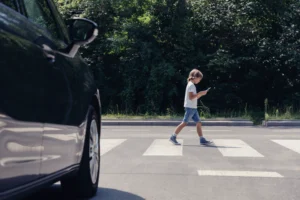 Pedestrian accident claims in Tampa do not always go smoothly. Insurance carriers for at-fault drivers frequently argue that the pedestrian shares responsibility, pointing to jaywalking, dark clothing, or failure to use a marked crosswalk. In a city where crosswalks are often absent entirely, that argument needs to be challenged directly and with preparation.
We have worked these cases from both sides of the negotiating table and know how carriers build their defenses in Hillsborough County. We do not move toward settlement until the full scope of an injury is documented and the liability picture is as clear as possible.
We have taken cases to trial when the number on the table did not reflect what a client actually lost, and that willingness is not a negotiating posture. It is how we operate, and our results speak for themselves. There is no attorney fee unless we recover on your behalf, though clients may still be responsible for certain litigation costs.
Pedestrian Dangers on Tampa Roads
Tampa’s road network was not designed with walkers in mind, and certain corridors repeatedly bear that out. High-risk areas include:
- Nebraska Avenue between downtown and Tampa Heights, where commercial driveways, fast-moving traffic, and limited pedestrian infrastructure create frequent conflict points
- Hillsborough Avenue near the retail corridors east of downtown, where wide lanes and high speeds meet pedestrian crossing demand
- Kennedy Boulevard approaching downtown, particularly near the Riverwalk and Channelside districts, where foot traffic increases significantly on evenings and weekends
- Neighborhoods near the University of South Florida and the University of Tampa, where student pedestrian traffic meets roads built for commuter volume
- Industrial and warehouse corridors near Port Tampa Bay and area distribution facilities, where large commercial vehicles operate in areas that workers sometimes cross on foot
Florida Law and How It Applies to Your Claim
Pedestrian Legal Protections
Under Florida Statutes § 316.130, drivers are required to exercise due care to avoid hitting pedestrians regardless of where the crossing occurs. Pedestrians have the right of way in marked crosswalks and at intersections, but outside those areas, pedestrians are generally required to yield to vehicles. That does not eliminate a driver’s responsibility to avoid a collision when a pedestrian is present and visible.
Florida’s modified comparative negligence standard under Florida Statutes § 768.81 means that if you are found partially at fault, your recovery is reduced proportionally. If fault is assigned above 50%, recovery is barred entirely. Expect the at-fault driver’s insurer to raise comparative fault arguments in almost every pedestrian case; how those arguments are handled affects the outcome.
Filing Deadline
The window to file a personal injury lawsuit in Florida is two years from the date of the accident under Florida Statutes § 95.11. That deadline is strict with very limited exceptions.
What a Pedestrian Accident Claim Can Include
Because pedestrians absorb the full force of a vehicle impact, the injuries tend to be severe and the associated costs extensive. A thorough claim may recover:
- Emergency treatment, trauma surgery, and hospitalization
- Orthopedic care for fractures, joint injuries, and spinal damage
- Neurological treatment if a head injury occurred
- Ongoing rehabilitation and physical therapy
- Lost income during recovery
- Reduced earning capacity for injuries that affect long-term work ability
- Pain, suffering, and loss of enjoyment of life
- Future medical costs projected with expert support
- Wrongful death damages for families who lost someone in a pedestrian accident
Steps That Protect Your Ability to Recover
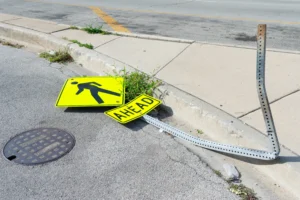 What happens immediately after a pedestrian accident can significantly affect a claim. If you are physically able at the scene:
- Call 911 and make sure a police report is filed
- Accept emergency medical evaluation even if injuries seem manageable in the moment
- Photograph the scene, the vehicle, the road conditions, and any visible injuries before anything is moved
- Get the driver’s name, license, and insurance information
- Note the names and contact information of any witnesses nearby
- Do not give a recorded statement to the at-fault driver’s insurance company before speaking with someone on your side
Frequently Asked Questions About Tampa Pedestrian Accident Cases
What If the Accident Happened in a Parking Lot or on Private Property?
Florida’s pedestrian right-of-way statutes apply to public roads. If you were struck in a parking lot, shopping center driveway, or other private property, the claim follows a different legal path, typically premises liability or general negligence rather than traffic statute violations. The driver can still be held responsible, and, depending on the property’s condition, the property owner may bear some responsibility as well.
What If the Driver Claims They Did Not See You?
That is one of the most common defenses raised in pedestrian cases, and it rarely ends the analysis. A driver’s failure to see a pedestrian who was present and visible may itself be evidence of inattention. Lighting conditions, vehicle speed, distractions, and sightlines are all part of how visibility claims are examined.
What If the Driver Who Hit You Was Uninsured or Underinsured?
Recovery is still possible. If the at-fault driver carried no insurance or not enough to cover your losses, your own auto insurance policy may provide a path through uninsured motorist or underinsured motorist coverage. Florida law allows pedestrians to access these benefits when struck by a driver who cannot cover the full extent of the damages. If you do not own a vehicle, coverage under a family member’s policy may apply. We can help identify what coverage is available and pursue every viable source of recovery.
Can a Pedestrian Claim Be Filed If the Driver Fled the Scene?
Yes. If the at-fault driver left and was not identified, a hit-and-run claim may still be pursuable. Florida law allows uninsured motorist coverage to apply in these situations in certain circumstances, and other evidence gathered at the scene can support the claim even without an identified driver.
Get a Case Evaluation From Our Pedestrian Accident Attorneys in Tampa at No Cost
Pedestrian accidents on Tampa’s roads tend to produce serious injuries, and the claims that follow them are rarely clear and easy. Smith, Feddeler & Smith, P.A. has handled these cases throughout Hillsborough County for years and is prepared to take on the insurance carriers, the liability disputes, and the work of building a claim that reflects what the accident actually cost you.
Call (813) 859-5671 or contact us online for a free case evaluation.

Phone calls were returned timely. I was kept informed of my case and my questions were answered. The staff was professional, courteous, concerned and caring. Overall my experience with this law firm was good and I would recommend them to a friend.
- Rhonda D.
Keep up the good work!
- Thomas B.Everyone who I had the pleasure in talking to or email correspondence has been great and professional. Thank you all for the good service.
- Elixsandra F.Everyone in the office was always helpful and did everything to help up on the case.
- Thomas D.I appreciate all the work you all did. I will recommended Brad Smith and Smith, Feddeler & Smith to anyone who is looking for good legal help.
- Robert S.I would like to thank Mr. Feddeler and the Law Firm for their help in my workers; compensation case. I want to especially thank Julie for being such a special lady and for have such a patient and wonderful personality and manners. She kept me informed of what was going on and answered all my questions when I needed them.
- Stanley E.I am thankful with the firm and staff for always being so courteous and helpful with my case and with me. You guys helped me every step of the way and I am glad I chose your firm to represent me. Thank you for all you do!
- A Montalvo.Everyone that was involved with my case was awesome! No complaints. Hope I never need to get a lawyer again, but if I did I would choose this Law Firm. So thank you!
- Juanita B.I was bit by a Pit Bull in the face in May of 2016. The injuries I suffered was a fractures nose and teeth marks to the nose and under my lip. I chose Smith, Feddeler because they had a great reputation on line. They were very compassionate, very sympathetic and very respectful of the situation I was going through. The attorney was very sincere and staff always responsive and available when I needed. I would definitely recommend Smith, Feddeler & Smith. Kevin Balentine was very helpful and efficient.
- Lauren M.If you ever want a good attorney who is going to fight and advocate for injured workers and knows the law of workers’ comp in the State of Florida, please contact Brad at Smith, Feddeler & Smith. I assure you they will fight for your rights and you will come out victorious, and you will be able to tell somebody else like I’m telling you.
- Ricky B.Contact Us For A Free Consultation With A Qualified Lawyer