
Roofing Accident Lawyer
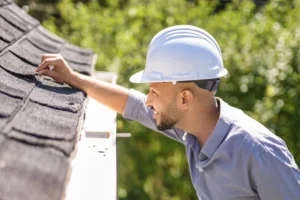 Roofing is one of the most dangerous jobs in the country, and when something goes wrong at height, the injuries are rarely minor.
Falls, equipment failures, and structural collapses can leave workers with broken bones, traumatic brain injuries, spinal damage, or worse.
If you were hurt on a roofing job, or if someone you love did not come home from one, you may have more than one legal option available, and knowing the difference can significantly affect what you can recover.
At Smith, Feddeler & Smith, P.A., we handle roofing accident cases for injured workers and their families throughout Florida. For a free case evaluation, call us at (863) 355-4204 or contact us online.
Why Roofing Accidents Cause Such Serious Injuries
Height changes everything. A fall from even a single-story roof can cause injuries that take months to recover from, and falls from commercial or multi-story structures are frequently fatal. According to the Bureau of Labor Statistics, falls consistently account for the highest number of construction fatalities each year, and roofers face disproportionately high exposure to that risk every single workday.
Beyond falls, roofers face hazards that most workplaces never see, including working in extreme heat with limited shade, handling heavy materials on unstable surfaces, operating near live electrical lines, and using tools and equipment that require constant attention to use safely. When any of those conditions are mismanaged, the results can be devastating.
Common Causes of Roofing Accidents
Most roofing accidents do not happen by chance. They happen because someone failed to follow a safety standard, maintain equipment, or properly train the people working on a job site. Common causes include:
- Missing fall protection systems, such as guardrails, safety nets, or personal fall arrest equipment, which are required under OSHA Standard 29 CFR 1926.502
- Defective or improperly maintained ladders, scaffolding, or lifts
- Unstable or structurally compromised roof surfaces
- Inadequate safety training or supervision
- Failure to account for weather conditions, including wet or slippery surfaces
- Contact with unguarded or unmarked electrical lines
- Falling tools or materials striking workers below
If any of these conditions played a role in what happened to you, that points to someone’s failure, not yours.
Who May Be Liable for a Roofing Injury
Florida law allows injured workers to pursue compensation from more than one party, depending on the circumstances. Liability in a roofing accident case can fall on:
- The general contractor: If a GC was responsible for overall job-site safety and failed to enforce safety standards.
- The property owner: If the condition of the property itself contributed to the accident.
- A subcontractor: If another trade created the hazard that caused your injury.
- An equipment manufacturer: If a defective ladder, harness, or piece of machinery failed under normal use.
- A staffing or labor company: If you were placed on a job site without proper training or equipment.
Identifying every responsible party matters because it directly affects what you can recover.
Workers’ Compensation and Third-Party Liability
If you were hurt while working on a roofing job in Florida, workers’ compensation is usually the first system that comes into play. Under Florida Statutes § 440.10, most employers are required to carry workers’ compensation coverage, and it provides benefits for medical treatment and a portion of lost wages without requiring you to prove your employer was at fault.
Third-Party Liability Might Fill In What Workers’ Comp Will Not Cover
Workers’ comp does not, however, cover everything. It does not include pain and suffering, and the wage replacement it provides is limited. If a third party, meaning someone other than your direct employer, contributed to your accident, you may have a separate personal injury claim on top of your workers’ comp benefits. These two paths can run simultaneously, and pursuing both is often the only way to recover compensation that reflects the full impact of what happened.
Deadlines for Personal Injury Cases
The statute of limitations for personal injury claims in Florida is generally two years from the date of the accident under Florida Statutes § 95.11. Waiting too long closes that door completely.
What Compensation Can You Pursue
Depending on whether your case involves a workers’ compensation claim, a third-party personal injury claim, or both, you may be able to recover:
- Medical expenses, including emergency treatment, surgery, hospitalization, and ongoing rehabilitation
- Lost wages from the time you were unable to work
- Reduced earning capacity if your injuries limit the type of work you can do in the future
- Pain and suffering and loss of enjoyment of life in a third-party personal injury claim
- Permanent impairment benefits if your injury results in a lasting disability
- Wrongful death damages if a family member was killed in a roofing accident
Why Choose Smith, Feddeler & Smith, P.A. for Your Roofing Accident Case
Roofing accident cases are not simple claims. They require investigating job-site conditions, pulling OSHA inspection records, reviewing contracts between general contractors and subcontractors, and often working with safety experts to determine what went wrong and who was responsible. Insurance companies move quickly after an accident to document the scene in ways that protect their interests, and injured workers need someone who is in their corner just as quickly.
At Smith, Feddeler & Smith, P.A., we do not settle for the first number an insurance company puts on the table. We take cases to trial when that is what it takes to reach a fair result, and the companies we go up against know it. That reputation comes from years of handling serious injury cases and an absolute commitment to seeing every single case through. Read our client testimonials to learn more.
Frequently Asked Questions About Roofing Accidents
Can You File a Claim If You Were an Independent Contractor on the Roofing Job?
Possibly. Worker classification in Florida construction cases is often disputed, and being labeled a contractor does not automatically disqualify you from benefits or a civil claim. How much control the hiring company has over your work, your schedule, and your tools can affect how you are actually classified under the law. This is worth discussing with our roofing accident lawyers, who can look at the specific facts.
What If Your Employer Does Not Have Workers’ Compensation Insurance?
The Florida Division of Workers’ Compensation has a process for handling claims against uninsured employers, and your employer can face serious penalties. You still have rights even if the coverage was not in place.
What If OSHA Has Already Investigated the Accident?
An OSHA investigation and citation can actually support your civil claim by establishing that a safety violation occurred. However, an OSHA finding is not the end of the legal analysis, and the absence of a citation does not mean no one was negligent. Both situations are workable.
Were You Injured in a Roofing Accident? Talk to Our Team About What Happened
A roofing accident can upend your entire life in a single moment, and the paperwork and phone calls that follow can feel impossible when you are dealing with serious injuries. At Smith, Feddeler & Smith, P.A., we handle the legal side so you can focus on recovering. We offer free case evaluations, and we do not get paid unless you do.
Call us at (863) 355-4204 or contact us online to get started.
Phone calls were returned timely. I was kept informed of my case and my questions were answered. The staff was professional, courteous, concerned and caring. Overall my experience with this law firm was good and I would recommend them to a friend.
- Rhonda D.
Keep up the good work!
- Thomas B.Everyone who I had the pleasure in talking to or email correspondence has been great and professional. Thank you all for the good service.
- Elixsandra F.Everyone in the office was always helpful and did everything to help up on the case.
- Thomas D.I appreciate all the work you all did. I will recommended Brad Smith and Smith, Feddeler & Smith to anyone who is looking for good legal help.
- Robert S.I would like to thank Mr. Feddeler and the Law Firm for their help in my workers; compensation case. I want to especially thank Julie for being such a special lady and for have such a patient and wonderful personality and manners. She kept me informed of what was going on and answered all my questions when I needed them.
- Stanley E.I am thankful with the firm and staff for always being so courteous and helpful with my case and with me. You guys helped me every step of the way and I am glad I chose your firm to represent me. Thank you for all you do!
- A Montalvo.Everyone that was involved with my case was awesome! No complaints. Hope I never need to get a lawyer again, but if I did I would choose this Law Firm. So thank you!
- Juanita B.I was bit by a Pit Bull in the face in May of 2016. The injuries I suffered was a fractures nose and teeth marks to the nose and under my lip. I chose Smith, Feddeler because they had a great reputation on line. They were very compassionate, very sympathetic and very respectful of the situation I was going through. The attorney was very sincere and staff always responsive and available when I needed. I would definitely recommend Smith, Feddeler & Smith. Kevin Balentine was very helpful and efficient.
- Lauren M.If you ever want a good attorney who is going to fight and advocate for injured workers and knows the law of workers’ comp in the State of Florida, please contact Brad at Smith, Feddeler & Smith. I assure you they will fight for your rights and you will come out victorious, and you will be able to tell somebody else like I’m telling you.
- Ricky B.Contact Us For A Free Consultation With A Qualified Lawyer